

Formal Sciences
What is a set?
A set groups well-defined objects; membership, inclusion and operations describe its structure.
8 min readDiscover
Pulse / Understand
Foundations to learn, connect ideas and deepen your knowledge.
One idea, a fresh perspective. Choose what you would like to understand.
Formal Sciences
A set groups well-defined objects; membership, inclusion and operations describe its structure.

Computer Science
From contract to proof: follow a maximum search, test its limits and distinguish method, program, correctness and termination.

Social Sciences
With technology unchanged, increasing one input while the others remain fixed often ultimately reduces its marginal product; if it is the only variable input, paid at a constant price, and as long as its marginal product remains positive, this decline raises marginal cost.
Search for an idea or browse the domains.
Showing 6 of 22 results
Computer Science
From contract to proof: follow a maximum search, test its limits and distinguish method, program, correctness and termination.
Formal Sciences
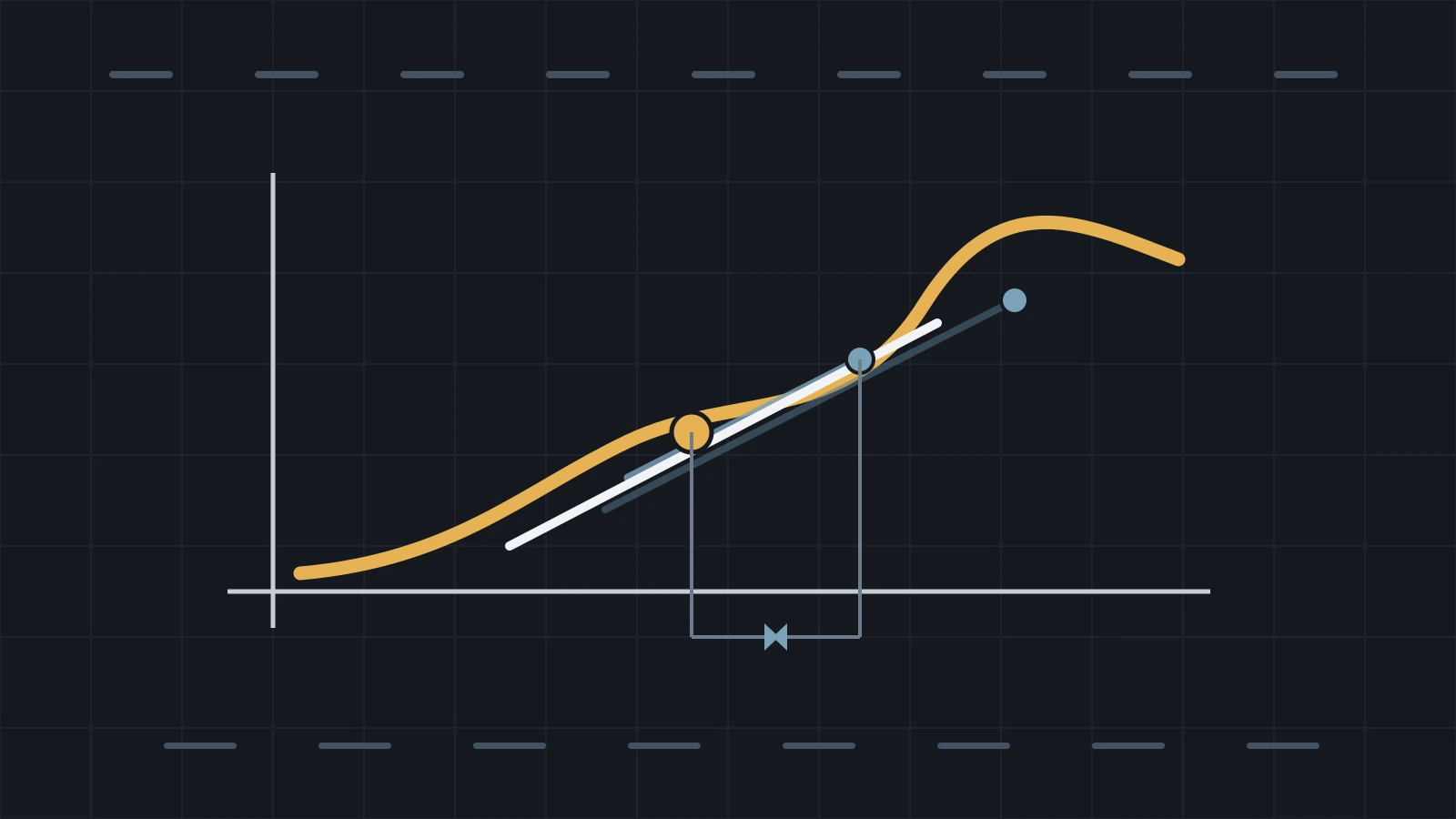
A derivative measures instantaneous change: it arises as the limit of rates of change and is interpreted as the slope of a tangent.

Formal Sciences
Rate of change measures average change between two specified inputs. See how interval choice, units, and representation determine what the number actually means.

Formal Sciences
A function is more than a formula: each allowed input has exactly one output. Distinguish domain, image, preimages, and the main representations of the same rule.
Formal Sciences
A set groups well-defined objects; membership, inclusion and operations describe its structure.

Formal Sciences
In a multigraph whose vertices of nonzero degree are all connected, degree parity determines whether every edge can be traversed exactly once.